The Catalan Pyrenees,
in a Day
From the sea to the high passes, and back before dark.
This is the most complete route Entremig offers in a single day: from Barcelona to the high Pyrenees and back, crossing the Eix Pirinenc, the Cerdanya plain, the Bishopric of Urgell, and the remote valleys below the Pedraforca. One day, ≈460 km, and thirteen centuries of Romanesque, frontier and mountain history — a full route, not a rushed one.
Straight into the high Pyrenees.
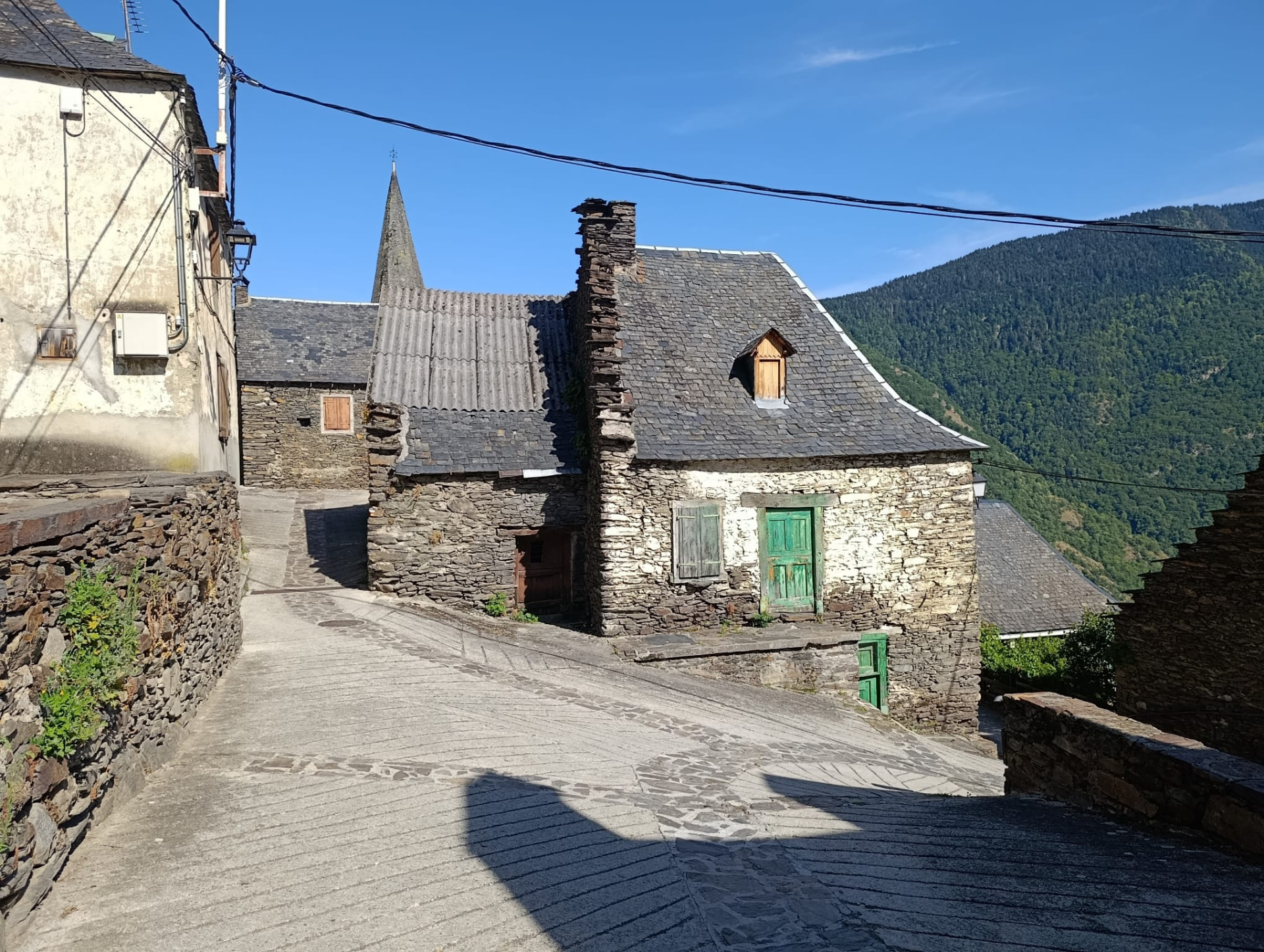
We leave Barcelona early and head north, climbing steadily until the plain gives way to the first real peaks. Ribes de Freser marks the gateway to the high Pyrenees and the start of the Eix Pirinenc (N-260). This mountain village is also the starting point of the historic rack railway — the cremallera — up to the Santuari de Núria, beneath the Puigmal massif. The engine's warm. The real climb starts here.
One of the great passes of the Pyrenees.
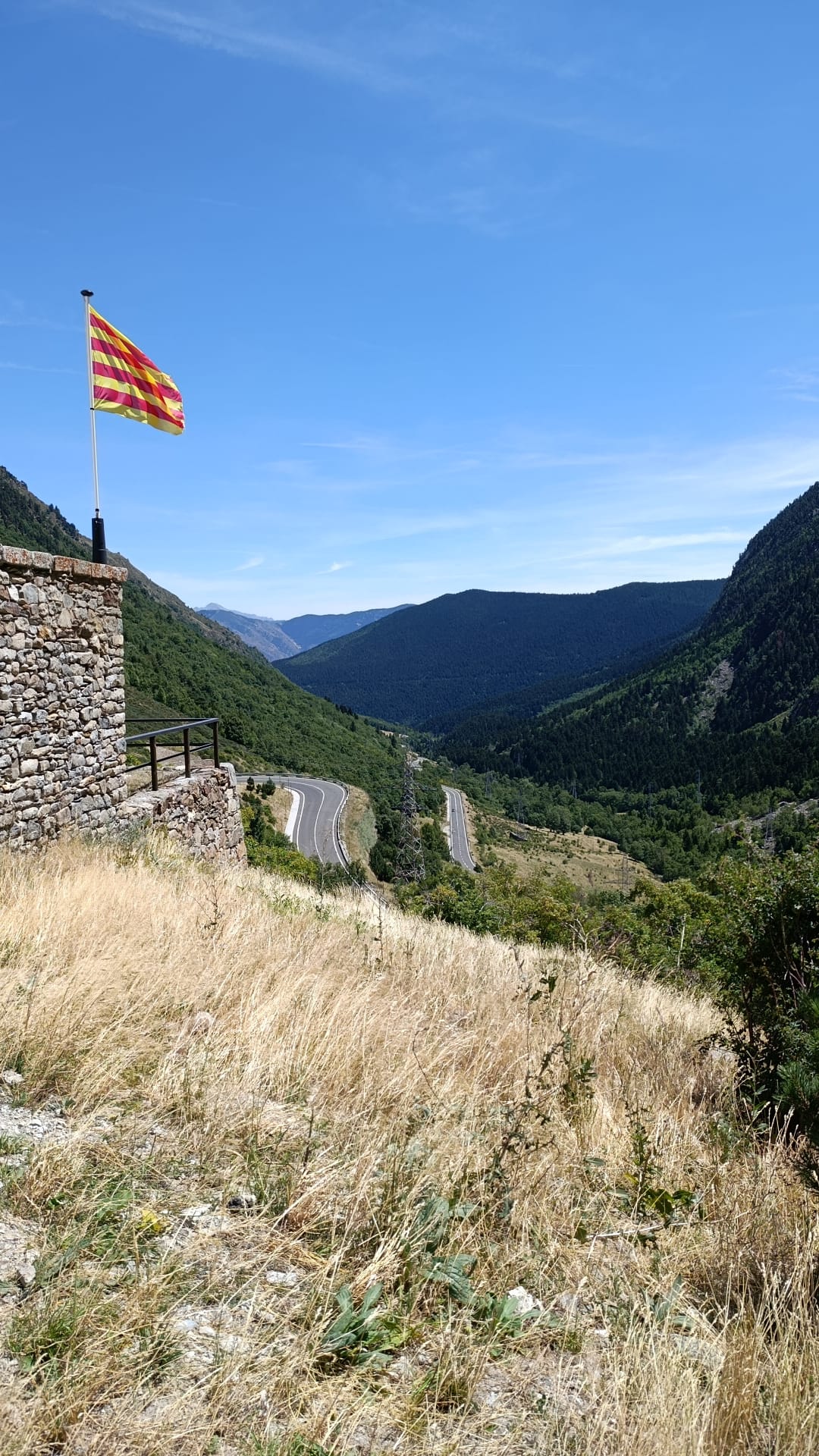
The N-260 climbs to the Collada de Toses, 1,800 m, one of the defining passes of the Eix Pirinenc — hairpins, thin air, and views that open up all at once. The road drops past La Molina, one of Catalonia's oldest ski resorts, and spills onto the wide plain of the Cerdanya.
The capital that watched an empire fall — and a war too.
Historic capital of the Cerdanya since the 12th century, Puigcerdà sits on a hill above the largest natural plain in the Pyrenees. Its lone Romanesque bell tower — the only part of the old church to survive the bombing of 1936 — still watches over the old town and its 700-year-old artificial lake.
A living medieval institution, still in office.
Seat of the Bishopric of Urgell and home to Catalonia's only fully preserved Romanesque cathedral, Santa Maria d'Urgell (12th c.). Since 1278 the bishop has also served as co-prince of Andorra, alongside the President of France — an 800-year-old title that is still, today, not just history.
The turning point, and the best view of the day.
We reach the high plateau south of La Seu — the turning point of the route. The scant ruins of the medieval Castell de Tost stand watch over sweeping panoramic views across the valleys of the Alt Urgell. From here, everything is downhill and deeper into the mountains.
The women who walked the length of Catalonia.
Heart of the Vall de la Vansa i Tuixent, and home of the trementinaires — itinerant women healers who, for over a century, walked the length of Catalonia on foot selling herbal remedies and turpentine-based ointments made from local plants. Their story is told at the small Museu de les Trementinaires, a piece of intangible heritage most guidebooks miss entirely.
Where Picasso stopped being Rose Period Picasso.
A remote mountain village at the foot of the Cadí, where a young Picasso spent ten weeks in the summer of 1906 with Fernande Olivier. Inspired by the Catalan Romanesque art around him, his work here shifted from the Rose Period toward the geometric simplification that would lead, a year later, to Les Demoiselles d'Avignon.
Catalonia's most iconic silhouette.
At the foot of the Pedraforca (2,506 m), Catalonia's most iconic double-peaked mountain. The village's lookout points give some of the classic views of the massif and the Cadí-Moixeró range — the postcard shot of the whole trip.
The finest Romanesque dome in Catalonia, and the smallest town.
One of the finest Romanesque monuments in Catalonia: an 11th-century Lombard-style church, the sole survivor of an Augustinian canonry, with a unique twelve-sided dome — set in Catalonia's smallest municipality by population. We linger here before the long ride back to Barcelona, the mountains fading behind us.
Return. Barcelona.
Return drive to Barcelona via Berga and the C-16.
Total: ≈460 km · ≈7h–8h of riding (excluding visits and lunch).
One long day. Everything that matters on the road.
- ✓Premium motorcycle — BMW or Honda, brand new and meticulously maintained
- ✓Expert guide — Art historian, 15 years and 250,000 km through Catalonia
- ✓Curated route — every stop selected for riding enjoyment, landscape, and cultural depth
- ✓Route support — notes, maps, and WhatsApp contact throughout the day
- ×Fuel for the motorcycle — not included (≈460 km); riders top up along the way
- ×Meals — lunch and any other food or drinks are not included on this route
- ×Protective gear (helmet, jacket, gloves, boots) — available to rent, ask when booking
- ×Entrance fees to museums or monuments along the way
- ×Traffic fines — rider's sole responsibility
- ×Personal expenses — souvenirs, extras, anything not listed
On gear: This is the longest single-day route we offer, crossing high mountain passes (Collada de Toses, 1,800 m) where temperatures can drop sharply even in summer. A full jacket, gloves and boots are strongly recommended regardless of season.
Ready to ride the Pyrenees in a day?
We answer every message within 24 hours. Tell us your date and preferred motorcycle.
Secure payment with Stripe · Confirmation message within the next 12 hours.