The Catalan
Pyrenees
From Barcelona to the Val d'Aran along the N-260, and back through the interior valleys.
Two days, one night, and a single road spine: the N-260, the historic Pyrenean Highway that runs the length of the range. The outbound day follows this axis west, crossing the Collada de Toses and the Port de la Bonaigua into the Val d'Aran — a valley that remained largely isolated from the rest of Catalonia until the mid-20th century, with its own language, Aranese, and its own Romanesque tradition. The return takes a different route through the interior: the valleys of the Alt Urgell and Berguedà, where Romanesque architecture, remote villages and Catalan mountain cuisine define the landscape as much as the roads themselves.
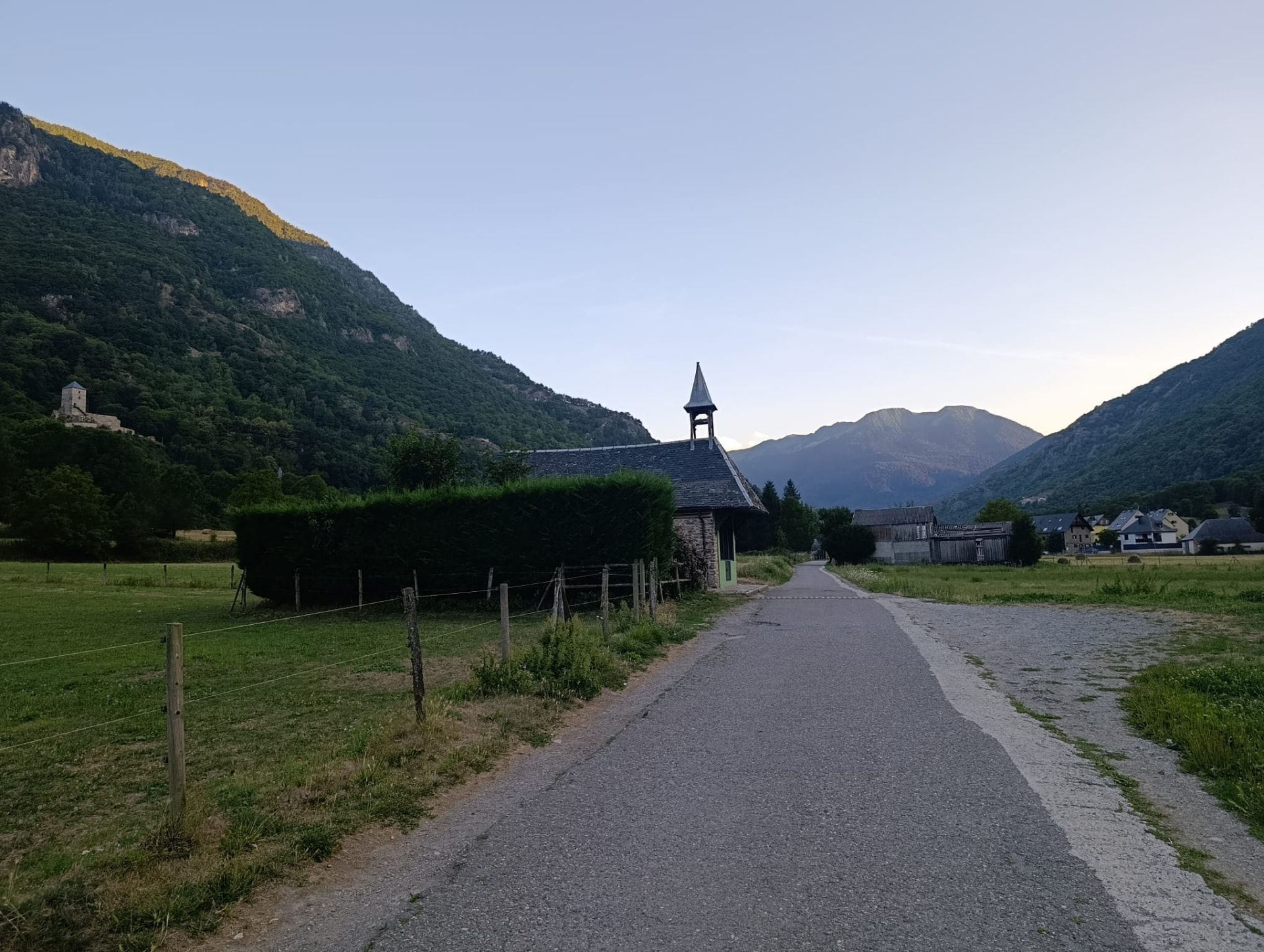
The Pyrenean Highway, from the Cerdanya to the Val d'Aran.
We leave Barcelona and reach Ribes de Freser, the gateway to the high Pyrenees, where the road joins the N-260. The climb to the Collada de Toses reaches 1,800 m before descending past La Molina into La Cerdanya, skirting Puigcerdà and its historic bell tower without stopping — the plain itself, wide and framed by peaks on both sides, is the point. We reach La Seu d'Urgell around midday: seat of the Bishopric of Urgell and home to Catalonia's only fully preserved Romanesque cathedral, Santa Maria d'Urgell (12th c.). This is a good point to stop for lunch at a masia or a restaurant serving traditional Catalan mountain cooking before continuing. From La Seu, the road carries on through Sort and Esterri d'Àneu, then climbs to the Port de la Bonaigua (2,072 m), the pass that separates the Pallars from the Val d'Aran. The descent into Aran marks a clear cultural shift: a different language, Aranese, a distinct Romanesque tradition, and architecture built for heavy snow. We reach Vielha in the afternoon, with time before dinner to walk the old town and see the Romanesque church of Sant Miquèu.
A second route back, through the interior valleys.
The return can follow the N-260 back over the Bonaigua, or take a different road through El Pont de Suert and La Pobla de Segur — the route we usually take when time and conditions allow, since it opens onto a different part of the range. From there the road climbs into the Vall de la Vansa i Tuixent by way of a tight zigzag ascent locally nicknamed the “Catalan Stelvio.” Tuixent itself is the base for the trementinaires, itinerant women healers who, for over a century, walked the length of Catalonia selling herbal remedies made from local plants; their history is documented at the small Museu de les Trementinaires. From Tuixent the road skirts the Pedraforca (2,506 m) through Gósol — where Picasso spent ten weeks in 1906, a stay that marks the transition from the Rose Period toward the geometric forms of his later work — and continues to La Pobla de Lillet. The last stop is Sant Jaume de Frontanyà: an 11th-century Lombard Romanesque church, the sole remnant of an Augustinian canonry, notable for its twelve-sided dome, in what is Catalonia's smallest municipality by population. From there, the road returns to Barcelona.
Everything on the road. Nothing you don't need.
- ✓Premium motorcycle (BMW or Honda, brand new)
- ✓Expert guide — Art historian, 15 years and 250,000 km through Catalonia
- ✓1 night at a premium hotel in Vielha (Val d'Aran)
- ✓Breakfast included the second morning
- ✓Curated route planning — every stop selected for riding, landscape, and cultural significance
- ✓Route support — notes, maps, and WhatsApp contact throughout
- ×Protective gear (helmet, jacket, gloves, boots) — available to rent, ask when booking
- ×Dinner in Vielha — the evening is yours; we recommend where to eat
- ×Fuel for the motorcycle — not included
- ×Midday meals — lunches at a masia or traditional Catalan restaurant — not included
- ×Activities in towns — entrance fees to museums or monuments along the way
- ×Traffic fines — rider's sole responsibility
- ×Personal expenses — drinks, souvenirs, anything not listed above
On gear: The law requires only a helmet. We recommend full protective gear. Our rental partner offers everything at competitive rates — let us know when booking.
Ready to cross the Pyrenees?
We answer every message within 24 hours. Tell us your dates and preferred motorcycle.
Secure payment with Stripe · Confirmation message within the next 12 hours.